Peperonata is one of those dishes—colourful, versatile, and brimming with bold flavours. Made by gently cooking bell peppers with onions and tomatoes, it’s a beloved tradition across Italy, with countless regional variations. In alla piemontese style, you’ll find anchovies, rosemary, and butter adding depth. In Sicily, the agrodolce (sweet and sour) version uses vinegar and sugar to create a delightful tang.
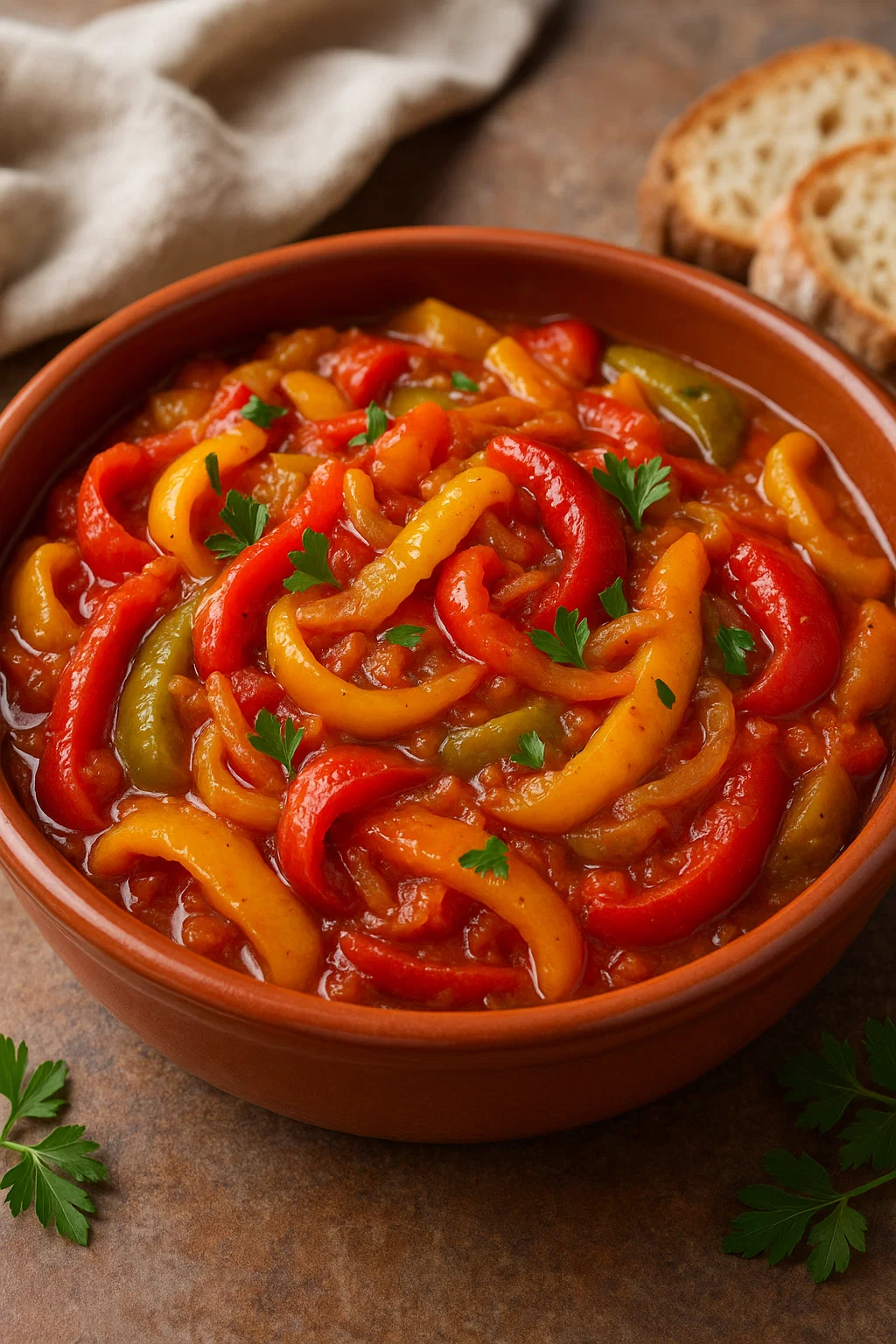
Whether served hot or cold, as a side, a starter, or piled high on a slice of toasted bruschetta, it’s a dish that always delivers. And for those who find bell peppers a bit heavy to digest, here’s a handy tip: bake them first, peel off the skin, and they’ll be much gentler on the stomach. However, you prepare it, Peperonata is an absolute joy to make—and eat!
Servings: 4
Ingredients:
- 6–7 bell peppers (about 2.2 lbs / 1 kg), sliced (mix of different colours)
- 2 red onions, finely sliced
- 14 oz (400 g) peeled plum tomatoes
- 4 tbsp olive oil
- 2 garlic cloves, peeled (whole)
- 4 basil leaves
- Salt and black pepper, to taste
Step-by-Step Instructions:
- Prep the bell peppers
Wash and slice 6–7 bell peppers (about 2.2 lbs / 1 kg) into strips, removing the seeds and membranes. For a lighter dish, bake the peppers at 400°F (200°C) for about 20 minutes, then peel off the skins. - Sauté the aromatics
Heat 4 tbsp olive oil in a large pan over medium heat. Add 2 whole garlic cloves and sauté for 1–2 minutes until fragrant. - Cook the onions
Add the 2 finely sliced red onions to the pan and cook gently for about 5 minutes, stirring occasionally, until softened. - Add the bell peppers and tomatoes
Toss in the prepared bell peppers and cook for 5 minutes, stirring to coat them in the oil and aromatics. Then add 14 oz (400 g) peeled plum tomatoes, crushing them slightly with your hands or a wooden spoon. - Season and simmer
Add salt and black pepper to taste, and stir in 4 basil leaves. Lower the heat, cover the pan, and let everything simmer for 25–30 minutes, stirring occasionally, until the peppers are tender and the sauce is rich. - Serve your Peperonata
Remove from the heat and let it cool slightly. Serve it warm or cold as a side dish, a starter, or on top of toasted bread for a simple bruschetta.
Buon appetito!
Nutritional Information (per serving):
Calories: 185 | Protein: 3 g | Carbohydrates: 18 g | Sugars: 10 g | Fat: 12 g | Saturated Fat: 2 g | Fibre: 5 g | Sodium: 160 mg
Disclaimer: The nutritional information provided in this blog is an estimate based on available online tools. It is not intended to serve as medical or dietary advice. We do not accept responsibility for any consequences arising from the use of this information.
Peperonata (Bell Peppers in Tomato sauce)
Ingredients
- 6–7 bell peppers (about 2.2 lbs / 1 kg), sliced (mix of different colours)
- 2 red onions, finely sliced
- 14 oz (400 g) peeled plum tomatoes
- 4 tbsp olive oil
- 2 garlic cloves, peeled (whole)
- 4 basil leaves
- Salt and black pepper, to taste
Instructions
- Prep the bell peppersWash and slice 6–7 bell peppers (about 2.2 lbs /1 kg) into strips, removing the seeds and membranes. For a lighter dish, bake the peppers at 400°F (200°C) for about 20 minutes, then peel off the skins.
- Sauté the aromaticsHeat 4 tbsp olive oil in a large pan over medium heat. Add 2 whole garlic cloves and sauté for 1–2 minutes until fragrant.
- Cook the onionsAdd the 2 finely sliced red onions to the pan and cook gently for about 5 minutes, stirring occasionally, until softened.
- Add the bell peppers and tomatoesToss in the prepared bell peppers and cook for 5 minutes, stirring to coat the min the oil and aromatics. Then add 14 oz (400 g) peeled plum tomatoes, crushing them slightly with your hands or a wooden spoon.
- Season and simmerAdd salt and black pepper to taste, and stir in 4 basil leaves. Lower the heat, cover the pan, and let everything simmer for 25–30 minutes, stirring occasionally, until the peppers are tender and the sauce is rich.
- Serve your PeperonataRemove from the heat and let it cool slightly. Serve it warm or cold as a side dish, a starter, or on top of toasted bread for a simple bruschetta.